Technical guide
310S vs 347 Stainless Steel in Turbocharger Applications: A Comprehensive Guide
Updated 2025-03-12
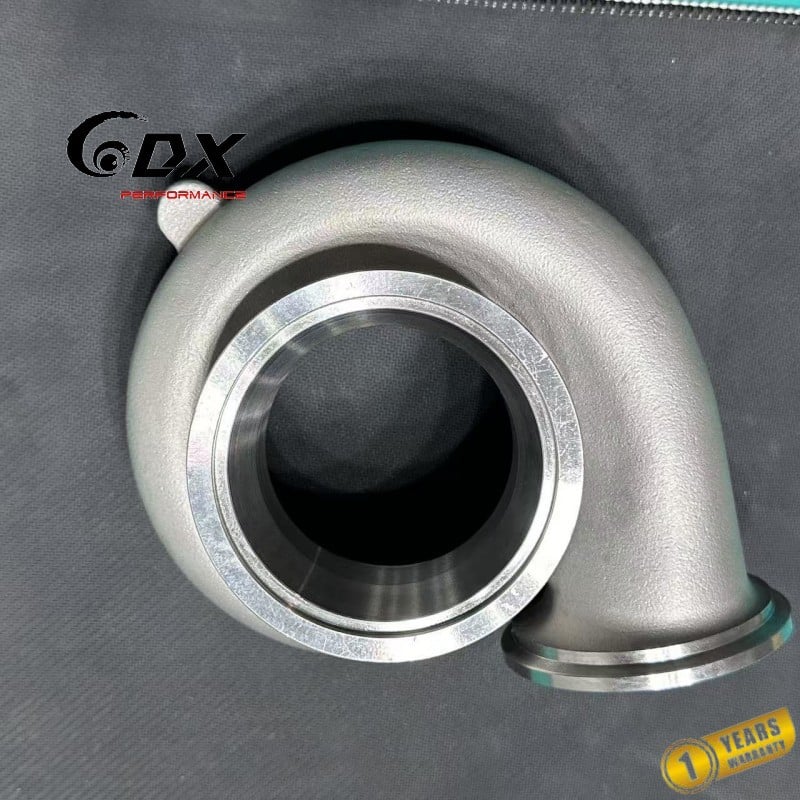
In turbocharger systems, the turbine housing must endure extreme temperatures (up to 1,000°C), corrosive exhaust gases, and cyclic thermal stresses. To achieve the intricate geometries and material reliability required, investment casting has become the gold standard for manufacturing turbine housings. This article delves into the investment casting process and compares two high-performance stainless steels—310S and 347—to guide material selection for turbocharger applications.
Why Investment Casting? Key Advantages for Turbine Housings
Investment casting (lost-wax casting) is a precision-driven process that excels in producing thin-walled, complex-shaped components like turbo housings. Here’s why it dominates the industry:
- Unmatched Complexity:
- Perfectly replicates intricate volute curves, flanges, and thin-wall designs without post-casting machining.
- Ideal for integrating internal channels or lightweight structures to optimize exhaust gas flow.
- Superior Surface Finish:
- Achieves smooth surfaces (Ra 3.2–6.3 μm), reducing turbulence and improving aerodynamic efficiency.
- Material Integrity:
- Preserves the alloy’s high-temperature properties by minimizing thermal distortion during solidification.
- Reduces defects like porosity through controlled cooling and vacuum-assisted casting techniques.
- Cost Efficiency:
- Eliminates material waste compared to CNC machining, critical for expensive alloys like 310S and 347.
Post-Casting Treatments:
- Heat Aging: Enhances stress resistance by stabilizing the microstructure.
- Shot Peening: Improves fatigue resistance for cyclic thermal loading.
- Oxidation Coating: Optional ceramic coatings for extreme-temperature applications.
310S vs. 347 Stainless Steel: Performance in Investment Cast Turbine Housings
| Property | 310S Stainless Steel | 347 Stainless Steel |
|---|---|---|
| Key Alloying Elements | 25% Cr, 20% Ni, 0.08% C max | 18% Cr, 11% Ni, +Nb (Columbium) |
| Max Continuous Service Temp | 1,100°C (2,012°F) | 900°C (1,652°F) |
| Thermal Cycling Resistance | Moderate (prone to carbide precipitation at 800–1,000°C) | Superior (Nb inhibits carbide formation, reducing intergranular corrosion) |
| Oxidation Resistance | Exceptional (Cr/Ni-rich oxide layer) | Good (Nb enhances stability in cyclic heating) |
| Corrosion Resistance | Excellent in oxidizing atmospheres (e.g., dry exhaust) | Better in sulfidizing or chloride-rich environments (e.g., marine, biodiesel) |
| Cost & Machinability | Higher material cost (Ni content); difficult to machine post-casting | More cost-effective; easier to machine due to Nb stabilization |
Application Scenarios
Choose 310S When:
- Operating temperatures exceed 950°C consistently (e.g., high-performance racing turbos, aerospace turbines).
- Long-term oxidation resistance is critical (e.g., industrial gas turbines).
Choose 347 When:
- Frequent thermal cycling occurs (e.g., automotive stop-start driving, hybrid engines).
- Cost optimization is needed without sacrificing corrosion/thermal fatigue resistance (e.g., commercial vehicle turbos).
Investment Casting Process for 310S/347 Housings: Critical Parameters
To maximize alloy performance, strict control during casting is essential:
- Wax Pattern Design:
- Simulate solidification to avoid hot spots in volute regions.
- Shell Molding:
- Use alumina-silicate ceramic shells to withstand high pouring temperatures (1,500–1,600°C).
- Pouring & Cooling:
- Vacuum casting for 310S to minimize oxidation.
- Controlled cooling rates to prevent cracking in 347’s Nb-rich structure.
- Quality Control:
- X-ray inspection for internal defects.
- Dye penetrant testing for surface cracks.
Conclusion
Investment casting enables the production of high-integrity turbine housings from 310S and 347 stainless steel, each excelling in specific turbocharger environments. While 310S is unmatched in extreme heat, 347 offers a balanced solution for dynamic thermal and corrosive conditions. By tailoring the casting process to each alloy’s properties, manufacturers can deliver lighter, more durable turbochargers
Contact us for more information , or develop customized turbine housings